“All that faith, and no potatoes.”
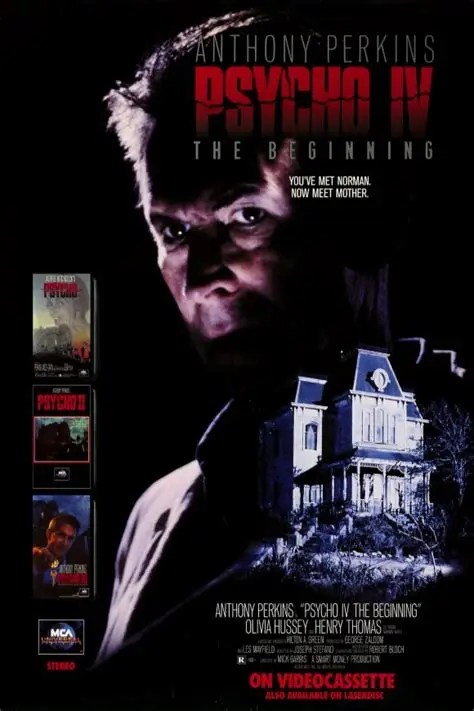
Tom Holland and Charles Edward Pogue wrote themselves into a corner with revelations about Norman Bates, his mother, Mrs. Spool, and the confused citizens of Fairvale, California. In Psycho II, Holland crafts a labyrinthian thriller that makes Norman the victim. In Psycho III, Norman is back to his old tricks but completely conscious of them. In Psycho IV, Joseph Stefano (the writer of the first Psycho movie) ignores the previous movies by putting Norman back in the house as if nothing happened. We’re required to assume he was released from an asylum and started a new life with his wife, who is pregnant with their child.
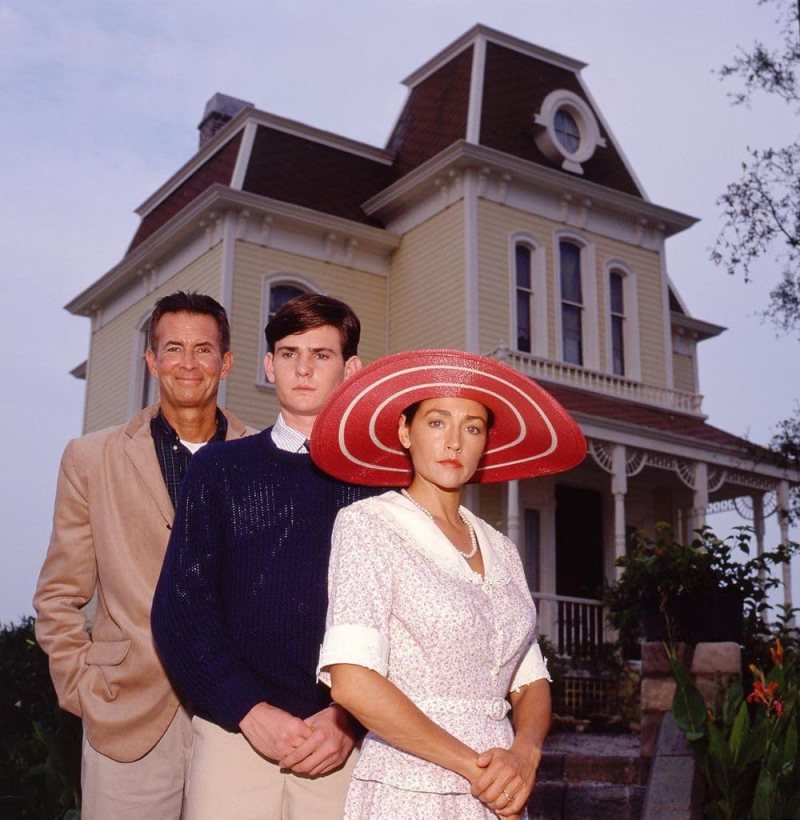
He happens to be listening to a talk radio show and the subject is matricide. He calls in to the show, uses the name, “Ed,” (possibly a reference to Ed Gein) and tells the producers the story of his upbringing. Young Norma Bates (Olivia Hussey) was a gorgeous and dangerously unstable woman. She hears voices, dresses young Norman (Henry Thomas) as a girl, smears lipstick on his face and molests him. She takes up with a man who abuses Norman, sending him over the edge. He poisons both of them, and the rest is history.
It takes a minute for the special guest of the show, Dr. Richmond (Warren Frost) to realize this is Norman Bates telling this story. We knew all of this before Norman started telling the story, but it is interesting to have visual markers in place of third-hand tales and town gossip.
The more intriguing part of the story is Norman’s fear that the child his wife carries will be as crazy as he was or is. The producers of the show are worried about Norman’s tenuous hold on his sanity. They are especially worried when Norman tells them he plans to kill his wife so that she can’t have the baby and continue the cycle.
Norman’s wife obviously has faith in him, and she’s a psychiatrist, for Pete’s sake. He takes her to the house, tries to kill her but fails. Instead, he sets the house on fire. So basically, love conquers all! I have issues with the ending, sure, but I still can’t get past the second and third movies. Norman’s sexual anxieties are also a big part of that confusion.
I have a hard time believing he did his time in the asylum, came out of it normal enough to court a psychiatrist, marry that person and then start a family. Even in the delusion of sanity, the mask he put on for the benefit of others, he wrestles with neuroses. Norman Bates is a Freudian nightmare, the eruption of the Id, and a danger to anyone who threatens his self-imposed anhedonia.
People who struggle with emotional dependency continue to struggle well into their maturity. Perkins always had that wonderful ability to sell doubt and internal conflict at the same time. He does it again in this fourth-go-round, but Stefano (who also had issues with his own mother) is using a hard-sell approach to modern psychology. He thinks “A’ always leads directly to “B” when “A” can go off into uncertain or bizarre directions and somehow wind up on “S.” He knows malevolence, but he doesn’t understand the human mind. The two are not the same.
October 23, 2026


Leave a Reply